
By Adrian H. Halili, Reporter and Vonn Andrei E. Villamiel
BUDGET WATCHDOGS warned that Congress’ rushed timetable to finalize the P6.793-trillion national budget for 2026 increases the risk of unchecked amendments and last-minute insertions, potentially undermining transparency.
Adolfo Jose A. Montesa, an adviser for the People’s Budget Coalition, said Congress’ tight schedule for bicameral conference committee meetings leaves little room for substantive debate, amid a backdrop of heightened concern over corruption in the budget process.
“The temptation there is to just prioritize political accommodations once again, rather than truly development and people-oriented budget amendments,” he said in a Viber message.
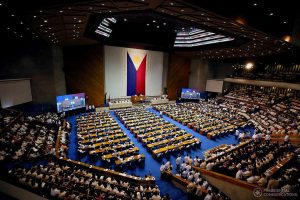
The House of Representatives and the Senate on Saturday convened the bicameral conference committee deliberations on the proposed 2026 national budget.
For the first time, lawmakers agreed to livestream the proceedings amid calls for transparency following the corruption scandal involving flood control projects.
“It is important that they will not sacrifice integrity and accountability as they pass the budget,” Joy G. Aceron, convenor-director of governance watchdog G-Watch, said in a Viber message.
“The schedule is tight, but we can’t have a reenacted budget,” she added.
Malacañang earlier called on Congress to hasten the passage of the proposed 2026 national budget, noting that President Ferdinand R. Marcos, Jr. does not want a reenacted budget.
Mr. Marcos earlier threatened to veto the proposed 2026 national budget and operate on a reenacted budget if Congress includes unauthorized insertions or deviates from his administration’s National Expenditure Program (NEP).
Ederson DT. Tapia, a political science professor at the University of Makati said the tight timeline may raise the risk of more questionable budget insertions.
“A compressed timeline increases the danger of errors, unvetted amendments, and last-minute insertions that even lawmakers themselves may not fully catch,” he said in a Facebook Messenger chat.
Mr. Tapia said lawmakers should also enforce transparency initiatives.
“If Congress wants to demonstrate that transparency is real, not performative, the bicam must resist the temptation to rush and instead show that scrutiny and discipline guided the process,” Mr. Tapia said.
Anthony Lawrence A. Borja, an associate political science professor at De La Salle University, said that the public must continue to watch out for problematic projects that could be included in the 2026 budget.
“We must keep an eye on the controversial projects that can serve as both sources of welfare and patronage,” he said in a Messenger chat.
Congress seeks to finalize the 2026 national budget by this week and ratify the bicameral report by Dec. 22.
Senator Sherwin T. Gatchalian, who heads the Senate Committee on Finance, said earlier that lawmakers expect to have the budget signed by the President on Dec. 29.
AGRI BUDGETMeanwhile, the bicameral committee approved late on Saturday a combined P214.39-billion budget for the Department of Agriculture (DA) and attached government corporations, 1.9% higher than the P210.25 billion proposed under House Bill (HB) No. 4058 or the 2026 General Appropriations Bill.
The DA and its attached agencies will receive P185.77 billion, up 3% from the P180.29 billion allocated under HB 4058. From this budget, the Office of the Secretary will receive P165.54 billion, 2% more than the P162.03 billion allocated under HB 4058.
The Committee approved a P33-billion budget for the repair, rehabilitation and construction of farm-to-market road (FMR) projects in designated key production areas, slightly higher than the P32.6 billion in the House version. The DA is set to take over the implementation of FMR projects from the Department of Public Works and Highways starting next year.
The agriculture sector earlier received a P53.8-billion budget hike under HB 4058 from the P255.5 billion slashed from the proposed budget of the DPWH. The additional budget will be used to fund agricultural infrastructure, such as FMRs and postharvest facilities.
While the committee approved the DA’s budget for FMRs, some members said the department still needs to boost its capacity to implement infrastructure projects.
“DA has to beef up its manpower, especially for the (Bureau of Agricultural and Fisheries Engineering). They’re very short-staffed to be able to implement all of this,” House Appropriations Committee Chairperson Rep. Mikaela Angela B. Suansing said.
The committee also approved a proposed P10-billion budget for the Presidential Assistance to Farmers and Fisherfolk, expected to benefit 1.43 million farmers and fishers.
“They are susceptible to weather disturbances. They live a very volatile life. That’s why I can see a specialized program for them. I see the benefit, especially for farmers and fisherfolk,” Finance Committee Chairperson Sherwin T. Gatchalian said in mixed English and Filipino.
Among the attached agencies of the DA, the biggest budget increase went to the Philippine Carabao Center, after receiving an additional P1.21 billion to P2.08 billion.
Meanwhile, the budget for government corporations under the DA was reduced by 4.47% to P28.62 billion from the proposed P29.96 billion under HB 4058.
This was due to the removal of the P4.19-billion budget intended for the establishment, repair and rehabilitation of postharvest facilities under the National Food Authority. The committee recommended the removal of the budget as the proposed Rice Industry and Consumer Empowerment (RICE) Act, which seeks to expand the NFA’s powers, has yet to pass Congress.
On the other hand, the committee increased the budget of the National Dairy Authority to P2.38 billion from P531.02 million under HB 4058, to support the implementation of the milk component of the Department of Education’s school-based feeding program.
The Philippine Crop Insurance Corp. also received a P6.5-billion budget allocation, up from the P5.5 billion in the House version, to provide insurance coverage to more farmers and fisherfolk.