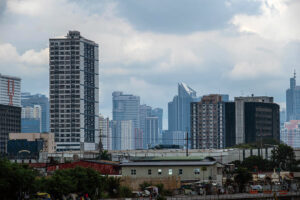

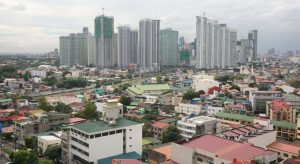
RECENT social media reports about groups of young people gathering and causing disturbances in Bonifacio Global City should not be viewed only as isolated behavioral problems. They also reveal deeper structural and governance issues in how Philippine cities are planned, regulated, and shared. These groups — often arriving in clusters — have made visible use of BGC’s streets and open areas: skateboarding along walkways, congregating on High Street, and attending vehicle meetups. Videos circulating online show marshals escorting them out and discouraging their continued presence.
Urban concerns should not automatically be sensationalized. They deserve thoughtful examination through the lens of planning, management, and public policy. Cities are not static backdrops; they are living systems shaped by the rules, designs, and values of the communities that build and run them.
PRIVATELY CONTROLLED URBAN ENVIRONMENTSAcross many Philippine cities, a large portion of functional urban space has effectively been delivered by private developers, partly because the government has struggled to comprehensively manage and guide urban growth. As I once wrote in my term paper as a student at the University of the Philippines, “Development is not worthy of the name, unless it is spread evenly like butter on a piece of bread.” Business districts such as BGC, the Makati CBD, Rockwell, and major malls have gradually taken on the role of parks, plazas, and civic centers.
While these developments have undeniably improved urban quality in many areas, they also raise an important question: who truly has the right to occupy and enjoy these spaces?
In a genuine city, the young and old, workers and entrepreneurs, creatives and leaders all participate in the same shared public realm. When access is selectively filtered or tightly curated, economically marginalized groups — especially the youth — are usually the first to push against those limits. If the response is to exclude or disperse them outright, it suggests we are no longer building inclusive cities but controlled enclaves.
YOUNG PEOPLE AND URBAN LIFEYouth gathering in prominent city spaces is not a new phenomenon. Throughout history, plazas, boulevards, sidewalks, and waterfronts have functioned as social stages where young people form identity, build friendships, and engage in civic life beyond home and school. Public space has always been part of youth culture and social development.
Labeling this entirely as misconduct overlooks the broader urban context. A better question to ask is: what draws young people to places like BGC in the first place?
The attraction is not simply rebellion — it is opportunity and environment. BGC provides what many districts in Metro Manila fail to deliver: continuous sidewalks, proper lighting, landscaped streets, perceived safety, attractive surroundings, and places where one can stay without necessarily spending money. For many young residents across the metropolis, it represents a model of what a city environment could be.
From a planning perspective, disorderly behavior often signals a shortage of suitable public venues. When cities lack sufficient parks, sports areas, cultural centers, and waterfront destinations, people — especially the youth — will appropriate whatever space is available for their social activities, sometimes creating friction with authorities.
Youth presence in public areas should not automatically be interpreted as danger; it is often evidence of urban energy. A more serious warning sign is a city where only affluent citizens feel comfortable staying outdoors.
Leading global cities have addressed this challenge not only through enforcement but through thoughtful design and programming. Copenhagen invested in skate facilities and accessible waterfronts. Singapore developed youth hubs and civic plazas. Barcelona emphasized human-scale neighborhoods. Seoul nurtured evening cultural districts. These examples show that youthful activity can be accommodated through well-planned third places that channel energy productively. When cities provide enough inclusive venues, social pressure on any single district is reduced.
A WAY FORWARD FOR METRO MANILAPhilippine regulations under Presidential Decree 957 count roads as part of the required 30% open space in new developments, with only about 8% typically reserved for genuine parkland or recreational open areas. In contrast, Singapore requires roughly 45% open space exclusive of roads, while Hong Kong’s standards reach about 71%, also excluding roads. This comparison highlights how local development frameworks tend to prioritize saleable land over generous shared environments.
True urban safety does not come from barriers and guards alone. Urban thinker Jane Jacobs emphasized that everyday activity and natural visibility — what she described as “eyes on the street” — are fundamental to security. Active sidewalks, mixed land uses, and engaged ground floors increase accountability and reduce opportunities for wrongdoing. Empty, sealed-off districts often produce the opposite effect.
Exclusivity is often mistaken for protection. In reality, cities become safer when they are lively, visible, and socially integrated.
We can respond to recent incidents either with alarm or with constructive reform. Practical steps include:
Reclaim and democratize public space.
Sidewalks, parks, plazas, waterfronts, and cultural venues must be treated as civic infrastructure, not luxuries.
1. Design for mixed use and continuous activity
A city of single-purpose districts becomes empty and vulnerable after hours.
2. Enable natural surveillance (“eyes on the street”)
Active ground floors, permeable buildings, and lively pedestrian environments are our best defenses.
3. Provide youth-oriented programming
Sports facilities, skate zones, music spaces, cultural events, and night-time economy reduce friction and diffuse tension.
4. Make safety a shared social function
Security must involve communities, not only guards and checkpoints.
What we are seeing in BGC is not merely a policing concern; it is an urban planning lesson. Order, safety, and belonging are outcomes of how we design and govern our cities. Urban environments reflect collective priorities. When we shape them around people — including the next generation — we build places that are more secure, more humane, and more socially cohesive.
Architect Felino “Jun” Palafox, Jr. founder – Palafox Associates and Palafox Architecture Group, Inc. He has 53 years of experience in architecture and 51 years in planning. He was educated at Christ the King Seminary, the University of Santo Tomas, the University of the Philippines, and Harvard University. He founded Palafox Associates and Palafox Architecture and has completed more than 2,000 projects in 41 countries. He has received over 200 awards, including the UAP Dubai Awards First Lifetime Achievement Award in 2023.