

For decades, the Unprogrammed Appropriations (UA) quietly occupied a small, mostly irrelevant corner of the national budget. Its fiscal triggers — excess revenues, new revenue sources, or unprogrammed loan proceeds — rarely materialized. UA was tolerated because it was small (2-5% of the budget) and seldom used.
The constitutional objection — that the UA delegated to the Executive Congress’ power of appropriation — was acknowledged but treated as manageable. The sums were modest, and UA was practically dormant.
Then everything changed.
CONVENIENT STORYThe UA ballooned — and a convenient story emerged.
Between 2023 and 2025, UA ballooned to unprecedented levels:
• P807.2 billion in 2023
• P731.4 billion in 2024
• P363.2 billion in 2025
This expansion should have triggered alarms. Instead, it became the anchor of one of the most misleading fiscal narratives in recent memory.
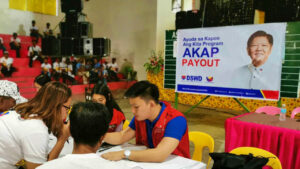
Legislators and contractors repeatedly claimed that UA funded the sudden proliferation of questionable projects: ghost or substandard flood control works, barangay roads and multipurpose buildings of dubious value, and patronage-driven assistance programs like Ayuda sa Kapos ang Kita Program, Assistance to Individuals in Crisis Situation, and Medical Assistance for Indigent and Financially Incapacitated Patients, better known as AKAP, AICS, and MAIFIP respectively.
It was a clean, convenient explanation.
It was also wrong.
NO TRIGGERSBy rights, the UA could not have been released.
The General Appropriations Act or GAA requires that UA be activated only when strict fiscal triggers are met. From 2023-2025, none of these occurred:
• There were no excess revenues: the Bureau of Internal Revenue and the Bureau of Customs missed targets; the Department of Finance confirmed shortfalls.
• There were no new significant revenue sources: New taxes were either marginal or earmarked.
• There were no certifiable new loan proceeds: Pandemic loans were already programmed.
• There was no documentation: There were no Treasury certifications, no Special Allotment Release Orders or SAROs, no agency requests for UA-funded programs.
In short:
The UA was never triggered. UA was never released.
It could not have funded the projects in question.
So why insist that it did?
Because UA was the alibi — not the source.
ALIBIEvidence from agency reports, internal communications, and legislative transcripts points to a different, clearer pattern:
1. Legitimate programmed items were cut during the Bicameral Conference Committee — including infrastructure, social services, calamity funds, and even foreign-assisted projects already approved on Third Reading.
2. These displaced items were “parked” under UA, where they appeared alive but were essentially frozen — insiders knew the triggers would never be met.
3. The funds freed from these deletions formed a large discretionary pool, no longer tied to the original programs.
4. This discretionary pool financed the controversial projects — the same ones later claimed to be “UA-funded.”
UA did not pay for the projects.
UA explained them away.
Its size and ambiguity made it the perfect smokescreen for fund movements that occurred elsewhere.
STRUCTURAL VULNERABILITYA dormant constitutional flaw becomes a structural vulnerability.
For years, the UA’s design flaw — blurring the line between legislative appropriation and executive execution — remained harmless because the UA was small and seldom used.
But once the UA was massively expanded and politically useful as an alibi, that flaw became dangerous. It allowed:
• hidden reallocations,
• opaque fund flows,
• false public explanations, and,
• weakened legislative accountability.
A standby appropriation became a shield for diversion.
THE REAL LESSON: ABOLISH UADebates about the UA’s constitutionality now pale beside the threat it has already revealed. The UA is no longer benign. It has become a tool for confusion, opacity, and evasion — a ready-made alibi for irregular spending.
It must be abolished.
Not only because it fails constitutional standards, but because it has already shown how easily it can distort the budget and obscure the truth.
The UA is no longer a harmless standby authority. n
Atty. Florencio “Butch” Abad served as vice-chair/chair of the House Committee on Appropriations (1995–2004) and secretary of Budget and Management (2010–2016). He is currently professor of Praxis at the Ateneo School of Government.