

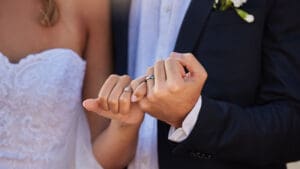
Not long ago, planning a wedding meant months of meetings with vendors, a church or venue booked a year in advance, and a guest list that somehow kept growing. Today? Couples are rewriting the rules entirely, and honestly, it’s fascinating to watch.
We live in a world that moves fast. Work schedules are packed, families are spread across time zones, and the idea of a two-year engagement filled with endless planning can feel overwhelming rather than exciting. So it’s no surprise that the wedding industry is shifting to meet couples where they are busier, more mobile, and more intentional about how they spend their time and money.
This isn’t about weddings becoming less meaningful. It’s the opposite, actually. Couples are cutting the noise and focusing on what truly matters: the commitment itself.
Why Traditional Weddings Are Losing Their Grip
There’s nothing inherently wrong with a traditional wedding. The ceremony, the reception, and the dancing until midnight can be magical. But for a growing number of couples, the logistics have become the enemy of the experience.
The average American wedding now costs well over $30,000. Add to that the time investment dress shopping, catering tastings, seating chart arguments, and vendor negotiations, and you start to understand why so many couples are stepping back and asking, “Is this really what we want?”
Several things are pushing this shift:
Rising costs of venues, catering, and photography have made big weddings financially stressful for many couples starting their lives together.
Remote work and relocation have scattered families, making it harder to gather everyone in one place.
A cultural shift toward minimalism and intentionality is leading people to question whether a massive event truly reflects their values.
The COVID-19 pandemic forced many couples to downsize, and a surprising number of them actually preferred it.
The Rise of Micro-Weddings and Elopements
Micro-weddings, typically 20 guests or fewer, have exploded in popularity. They offer the intimacy of a meaningful ceremony without the logistical circus of a 200-person event. Couples can spend more on each guest’s experience, choose a unique or unconventional venue, and actually enjoy their own wedding day.
Elopements, too, have shed their old reputation. They’re no longer seen as secretive or shameful. Instead, they’ve become a bold, romantic statement just the two of you, making a promise, on a mountaintop or a quiet beach or in your living room.
What Makes a Micro-Wedding Work
A smaller guest list doesn’t mean a lesser experience. In fact, many couples report that their micro-weddings felt more personal and emotionally resonant than a traditional reception ever could. Here’s what helps:
Choosing a venue that actually means something to you, not just what’s available.
Writing personal vows instead of defaulting to the standard script.
Investing the saved budget into an extraordinary honeymoon or a home down payment.
Keeping the focus on the couple, not the performance of it all.
Technology Is Changing How Couples Say “I Do”
Perhaps the most dramatic shift in modern weddings isn’t about guest counts or venue choices; it’s about how the legal side of marriage is handled.
For generations, getting legally married meant scheduling a courthouse appointment, standing in line, and navigating a bureaucratic process that felt completely disconnected from the romantic milestone you were marking. That’s changing. Online platforms now allow couples to handle much of this process from home, and in some states, it’s possible to get married online legally, a development that would have seemed unthinkable even a decade ago.
This isn’t about removing romance from the equation. It’s about separating the legal formality from the personal celebration. You can handle the paperwork efficiently and then celebrate in whatever way feels most meaningful to you, whether that’s a destination ceremony, an intimate dinner with close friends, or a backyard gathering with your favorite people.
What Online Marriage Services Actually Offer
It’s worth understanding what these services do and don’t do. They’re not replacing the ceremony; they’re streamlining the legal steps that happen before or after it. Typically, they help with:
Marriage license applications guide couples through the requirements in their state.
Connecting couples with ordained officiants who can perform legally recognized ceremonies.
Facilitating virtual ceremonies for couples who are in different locations or whose families are spread across the country.
Simplifying the paperwork that follows, including name changes and certificate processing.
For couples who are practical by nature or who simply don’t want the courthouse experience to be their defining memory, this kind of service fills a real gap.
Destination Weddings and the Global Couple
Another major trend reshaping the wedding landscape is the destination wedding, and not just in the classic Tuscany-villa sense. Today’s couples are choosing locations for deeply personal reasons: the beach town where they got engaged, the city where they met, the country one partner calls home.
Destination weddings also naturally limit guest lists, which many couples see as a feature rather than a drawback. Only the people truly committed to celebrating with you will make the trip. The result is often a tighter, more heartfelt experience.
That said, destination weddings come with their own legal complexities. Marriage laws vary by country, and some couples choose to legally marry at home, sometimes through an online service, and then hold their celebration ceremony abroad without the added paperwork.
What Couples Actually Want Now
Surveys and industry data tell an interesting story. Couples today prioritize a few things above all else when planning their wedding:
Authenticity – they want the wedding to feel like them, not like a template.
Flexibility – they want options that fit their actual lives, not idealized versions of them.
Simplicity – fewer vendors, less stress, more presence on the day itself.
Financial sanity – starting a marriage without crippling debt feels like a foundation, not a sacrifice.
The wedding industry is responding. Vendors who once specialized in grand ballroom events are now offering elopement packages. Officiants are getting ordained online and performing ceremonies in parks, living rooms, and rooftops. Photographers are building entire brands around intimate moments rather than large crowds.
The Legal Side Doesn’t Have to Be the Boring Part
There’s a tendency to treat the legal marriage process as purely administrative, something to get through before the “real” celebration begins. But that mindset is shifting.
Some couples are leaning into the simplicity of a legal ceremony as the ceremony itself. They dress up. They say meaningful words. They sign the license with intention. Platforms that let you get married online legally have made it possible to create a genuinely personal experience around the legal act of marriage, not just a checkbox before the party.
Think about what that means. A couple living in different cities could have a virtual ceremony with family dialing in from three different countries, and it would be legally binding. A couple who eloped could hold a surprise dinner for their closest friends a month later to celebrate, without any of the pressure of a traditional reception.
These aren’t lesser versions of getting married. They’re just different and, for many people, far more fitting.
Is This the End of Traditional Weddings?
Not at all. Traditional weddings aren’t disappearing; they’re just becoming one option among many, rather than the default expectation. Plenty of couples still dream of a white dress, a packed dance floor, and a five-tier cake. And they should have that if it’s what they want.
What’s ending is the idea that there’s only one right way to start a marriage. The pressure to conform to a template that may not fit your life, your budget, or your personality is slowly lifting, and that’s genuinely good news for everyone.
Couples who choose a courthouse elopement aren’t any less married than those who had 300 guests and a string quartet. The commitment is the same. The love is the same. The paperwork, legally speaking, is identical.
The Wedding of the Future Is Already Here
Weddings are changing because people are changing the way they live, work, and connect with the people they love. The modern couple isn’t settling for less when they choose a small ceremony or handle the legalities online. They’re making a deliberate choice about what their relationship’s foundation looks like.
At the heart of all these changes is a simple, timeless truth: marriage is about two people choosing each other. Everything else, the flowers, the venue, the number of guests, the method of filing a license, is just the frame around that central fact.
The most meaningful weddings have always been the ones that reflected the couple. Today, for the first time, there are enough options that any couple can actually find their version.
And maybe that’s the real story here, not that weddings are becoming simpler or more digital or less traditional, but that they’re finally becoming more honest. More personal. More you.