
THE Second Congressional Commission on Education (EDCOM II) is pushing for a 10-year education development plan that will set minimum education spending at 5.5% of gross domestic product (GDP) by 2035.
In its final report, EDCOM II said the government needs to sustain the upward trajectory of education spending beyond current budget trends.
According to the Constitution, education receives the biggest budget allocation, which was set at P1.015 trillion in 2026, equivalent to 4.36% of GDP.
The report added that the 10-year National Education Plan (NatPlan) estimates an “indicative incremental cost… of P2.66 trillion over the plan period.”
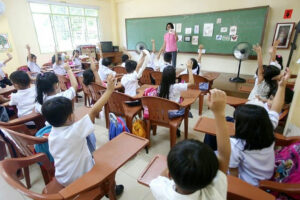
It proposes that basic education make up 60% of incremental investment, including funding for classroom construction and repair, teacher deployment and training, instructional materials, and programs to address issues like mass promotion and achieving functional literacy.
About 30% was proposed for higher education, mainly in expanded scholarships.
The rest will go to early childhood care and development along with technical-vocation education training.
The 10-year plan also proposes a timetable for education spending increases of 4% of GDP in 2028, 5% in 2031, and 5.5% by 2035. The target years are aligned with national political cycles and local government election cycles.
“It is envisioned to be a shared roadmap that unites government, schools, local leaders, and communities around one goal: to rebuild trust in our education system and prepare every Filipino to learn, work, and thrive,” the commission said.
The report identified key priority areas that requires aggressive government action: early childhood development, functional literacy in early learners, critical thinking, digital skills, graduate readiness, and inclusive learning.
“This is intended to strengthen accountability, enable course corrections, and anchor reforms within realistic governance and budgeting windows,” it added.
The plan also recommends the full implementation of the government’s Academic Recovery and Accessible Learning Program, which provides free targeted interventions, tutorials, and resources for struggling learners. — Adrian H. Halili