
PHILIPPINE President Ferdinand R. Marcos, Jr. wants Congress to abolish the country’s travel tax system before its June adjournment, Malacañang said on Tuesday, as the administration moves to cut travel costs and support tourism while pushing a broader slate of governance reforms.
The repeal was among 21 priority bills approved during a meeting of the Legislative-Executive Development Advisory Council (LEDAC) at the Palace, according to Press Officer Clarissa A. Castro. The measures are part of the President’s legislative agenda aimed at easing household burdens and restoring confidence in public institutions.
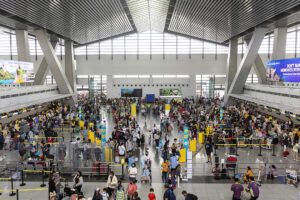
“The President saw that this would make travel more affordable for tourists and for Filipinos who need to travel,” Ms. Castro said, adding that the measure is expected to have positive spillover effects on the economy.
The proposal has raised concerns from groups that benefit from the levy, which funds tourism infrastructure, education and cultural programs. Ms. Castro said the government is aware of these allocations and plans to address the funding gap.
Under existing rules, half of travel tax collections go to the Tourism Infrastructure and Enterprise Zone Authority (TIEZA), 40% support education assistance and scholarships through the Commission on Higher Education, and 10% fund cultural programs of the National Commission for Culture and the Arts.
Ms. Castro said these programs would instead be financed through the national budget if the tax is repealed.
The Palace has also asked TIEZA to submit a full accounting of how travel tax revenues are used as part of efforts to improve transparency and accountability.
Congress has begun moving on the proposal. In the House of Representatives, Majority Leader Ferdinand Alexander “Sandro” A. Marcos III filed House Bill No. 7443 or the Travel Tax Abolition Act of 2026, which seeks to scrap the levy entirely. In the Senate, Senator Rafael “Raffy” T. Tulfo filed a bill that would exempt economy-class passengers while retaining the tax on business and first-class travelers.
House Speaker Faustino “Bojie” G. Dy III has said the chamber would hold nationwide consultations to speed up deliberations on the administration’s priority measures before lawmakers adjourn in June.
The Department of Economy, Planning and Development (DEPDev) said placing the travel tax repeal on the LEDAC agenda reflects a wider push to rebuild public trust, following public backlash over governance and spending issues.
Beyond tourism, the priority list includes proposals such as the Anti-Political Dynasty Law, Expanded Anti-Online Sexual Abuse or Exploitation of Children Act, and CADENA Act, which seeks to strengthen disclosure and oversight of public spending.
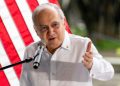
In a statement, DEPDev Secretary Arsenio M. Balisacan said the measures are designed to improve public service delivery and ensure stronger scrutiny of government expenditures.
He said the administration sees 2026 as a critical point to regain momentum by focusing on governance reforms that produce visible results for Filipinos. — Erika Mae P. Sinaking